
Innovative Solutions for an Inclusive Workplace in 2025
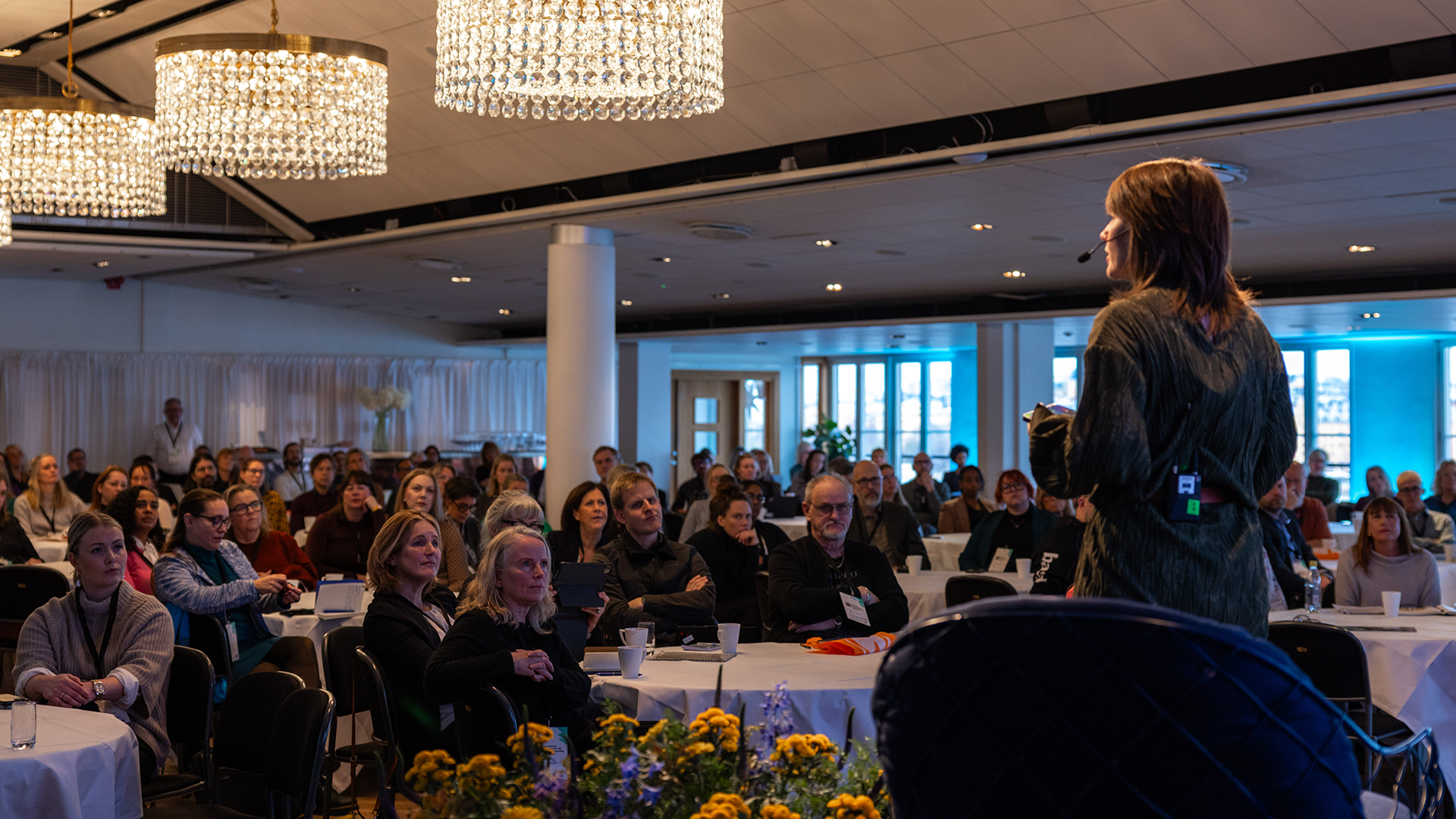
On November 19, 2025, we hosted the third edition of the conference “Innovative Solutions for an Inclusive Workplace” at Münchenbryggeriet in Stockholm, in collaboration with the National Network for Coordination Associations (NNS) and the Partnership for Social Innovation.
Over the course of a full day, we delved into questions such as:
Program
8:00–9:00 a.m. / Registration and coffee
9:00–9:10 a.m. / Hello and welcome
9:15–10:00 a.m. / Keynote / Does Social Innovation Equate to Social Justice? (In English)
Hayley Trowbridge, a researcher at the Social Science Research Park (SPARK) at Cardiff University in Wales and a social change facilitator at Evolving Works, will open the conference. Hayley will encourage us to reflect on how power shapes what is considered legitimate knowledge and how alternative ways of knowing can lead to transformative practices in social innovation.
10:00–10:30 / Coffee break
10:30–11:30 / Breakout sessions
1: How can Theory of Change and highlight social innovations?
In this session, we discuss lessons learned about how Theory of Change can be used to support and highlight innovation and development work that addresses societal challenges. People with extensive experience in Theory of Change lessons learned and key strategies for using Theory of Change to support social innovations for an inclusive workplace.
Participants
Gordon Hahn, Coompanion Sweden
Jimmy Yoler, Swedish Standards Institute
Jonna Källström-Böresson, ESF Council
Karl Johan Bonnedahl, Umeå University
Moderator
Roger Orwén
3: Regional mobilization to address societal challenges
At this session , stakeholders who have an interest in to learn more about howwe can strengthen regional mobilization to address societal challenges in innovative ways. We’ll hear examples from Sweden, Spain and Portugal of how stakeholders collaborate regionally to find better solutions to current societal challenges. There is then room for joint exploration of what can contribute to long-termg regional organization to strengthen the collective capacity to address societal challenges through cross-sectoral collaboration.
Participants
Roger Filipsson, Coompanion Västerbotten
Luis Campos, NASERTIC
Liliana Ribeiro, IRIS
Moderator
Anna Tengqvist
2: Current research that addresses societal challenges through co-creation
How can research help address current societal challenges through collaboration with relevant stakeholders? This session will present some insights and examples fromthe Forum for Social Innovation Swedenresearch conference onthis topic, which took place the day before. In particular, the session will discuss the opportunities and challenges of involving particularly vulnerable groups in research, such as people experiencing homelessness, children and youth, and people with disabilities.
Participants
Åsa Kneck, Marie Cederschiöld University College
Simon Lindblom, Mälardalen University
Malin Lindberg, Malmö University
Moderator
Gloria-Karin López
4: The Audience Stage
At this year’s conference, we’re giving more individuals and organizations the opportunity to help shape the event. During this breakout session, conference participants will take the stage to present ideas or projects they’re working on. As a participant in this session, you’re invited to ask questions and share insights based on your own experiences or work!
Presentations & Participants
- Mind the Gap – Mental Health and Professional Inclusion for Highly Skilled Immigrants, Melle Ayelle Worku, Child Rights Eurasia
- Language Development – A Key Piece of the Puzzle in Workplace Inclusion, Malin Brander, Näska
- Why don’t associations invest in social innovation? Ylva Lundkvist Fridh, Mikrofonden
- Innovative Methods That Make a Difference, Lena Lago, Skoopi
Moderator
Lotta Orban
11:30 a.m.–12:00 p.m. / Harvest Time
12:00–1:00 PM / Lunch
1:00–1:30 p.m. / Lessons learned on social innovation in the European Social Fund
What can we learn from the European Social Fund’s special focus on social innovation during the 2021–2027 programming period? This session presents the collective lessons learned from the three annual analysis reports produced by the national center of expertise for social innovation within the ESF. Among other things, the session will discuss the conditions and initiatives required at the project, program, and societal levels to ensure that the ESF’s initiative enables the development and implementation of innovative approaches in the areas of social inclusion, the labor market, and education.
Participants
Malin Lindberg, Visiting Professor at Malmö University
Andreas Larsson, Regional Director, ESF Southern Sweden
Maja Falkeborn Willner, Project Manager for Odla svenska, Stenungsund Municipality
Moderator
, Nicklas Wallberg
1:30–2:00 PM / Keynote: Daring to Rethink and Just Do It
There is a 60-year age difference between Stig “Stigge” Arne Bäckman and Marx Mukaru. Through a performance and conversation, we get to follow their different yet similar journeys. Listen to anecdotes, stories, and events about deep social engagement, how to view and address exclusion and inclusion, and how to cultivate a vision for the future. The conversation concludes with poetry by Marx Mukaru and Nasir Sarr.
2:00–2:10 p.m. / Break
2:10–3:10 p.m. / Parallel sessions
1: Ways to fund innovative social solutions
Social innovations are based on collaboration, often across social sectors. They challenge both practices in how we do things as well as what and with whom. As we are breaking new ground, questions arise about how these initiatives can find new ways to finance their operations. Sometimes we find funding through grants (such as the ESF) that can cover large parts of our operations. But project funding is, by definition, time-limited. How do we create long-term financing solutions for our innovative ideas and operations? And how could we combine different sources of capital?
Participants
Sophie Nachemson-Ekwall, Forever Sustainable
KaTarina Nilsson, Fryshuset
Tinna Harling, Egnahemsfabriken
Andreas Larsson, Swedish ESF Council South
Ylva Lundkvist-Fridh, Mikrofonden
Moderator
Lotta Orban
3: Regional mobilization around societal challenges using ecosystem models (English)
This session focuses on how ecosystem models can help mobilize stakeholders and resources around innovative initiatives to address societal challenges at the regional level. Such models help clarify the framework conditions that promote or hinder innovative solutions to societal challenges. During the session, examples of ecosystem models from Sweden will be presented, along with recommendations from an upcoming report on ecosystem models for regional support of social innovation. Participants are encouraged to discuss how this type of model can be useful for regional mobilization of stakeholders and resources to address societal challenges.
Participants
Roger Filipsson, Coompanion Västerbotten
Malin Lindberg, Forum for Social Innovation Sweden
Anna Tengqvist, Forum for Social Innovation Sweden
Moderator
Gloria-Karin López, Forum for Social Innovation Sweden
2: More Than Just an Idea – From Innovation to Social Impact
How can we work together to create better conditions for social innovations to have a real impact? In this interactive workshop, we’ll explore ways to scale up and spread solutions that contribute to an inclusive workplace. We’ll highlight experiences from ongoing ESF projects—how can implementation be achieved through networked projects and participant influence, and how does project support work? We’ll discuss systemic changes and co-create concrete proposals—with the goal of building a vibrant network for the future. Together, we can pave the way from good ideas to sustainable social change.
Participants
Anna Lexelius, National Network for Coordination Associations (NNS)
Thomas Lidén, National Center of Excellence for Social Innovation
Helena Stavreski, Malmö University
Moderator
Mattias Bergström
4: Campfire
This session takes the form of “campfire conversations.” We gather around the fire, just as we have done for thousands of years, to share our insights and challenges. We exchangeexperiences experiences from our respective projects and initiatives regarding labor market inclusion. We hope this will deepen our understanding of what innovative solutions to complex societal challenges mean for us.
Discussions and participants
- How hard can it be to give young people a voice in society and take their perspectives into account? What is it, really, that’s holding us back? With Hilda Ahlstrand, Karlskrona Municipality and co-project manager for the ESF project Mission: Young People Lead the Way, and Anna Lindeberg, Region Blekinge, project manager for the ESFproject Mission: Young People Lead the Way.
- How does criminal activity hinder young people’s entry into the labor market? With Bantala Losembe Labama, founder of the organization Youth First
- Finsam as a tool for addressing complex societal challenges – why aren’t we doing more of what we know works? With Henrik Svedberg, National Network for Coordination Associations, and Sandra Svensson, National Network for Coordination Associations (NNS), and Martina Kopra, participant
Moderator
Roger Orwén
3:15–3:45 p.m. / Coffee break
3:45–4:15 PM / Harvest Time / What have we experienced, discussed, listened to, and learned so far today?
Participants
Carl Lundberg, Umeå University
Bitti Alvin, Coompanion Gävleborg
Nasim Khosravi, Axelerate at Axel Johnson
Mattias Segerbrand, Good Advice
2:15–2:45 p.m. / What opportunities exist for social innovation at the policy level in Sweden?
Our social structures—the political, economic, legal, and technical frameworks and regulations in Sweden—are among the factors that influence social innovation. What is the political landscape for social innovation in Sweden? What opportunities exist at the policy level? In this session, we will present a policy review on social innovation conducted by Ramboll on behalf of the National Center of Excellence for Social Innovation within the European Social Fund. We will then discuss how the Center of Excellence can capitalize on the opportunities and openings that exist at the policy level.
Participants
; Anna Tengvist, Forum for Social Innovation Sweden
; Gordon Hahn, Coompanion;
; Mattias Bergström, National Network for Coordination Associations (NNS);
; Aleksandra Wasso, Famna
Moderator
, Nicklas Wallberg
4:45–5:00 PM / Thank you & see you soon!
Contact

