
Future-Making Academy
The Future-making Academy is a space for learning and reflection that strengthens participants’ ability to envision and discuss alternative, more sustainable futures. Through shared reading and dialogue, research is made accessible and connected to the participants’ own practices in social change.


AbouttheFuture-making Academy
People working to bring about social change face complex challenges today. The world is changing rapidly, and there is often a great deal of uncertainty. At the same time, there is often a lack of spaces where people can pause, reflect, and engage in dialogue without immediately having to come up with solutions. The Future-making Academy was created to meet that need.
A book club
At the Future-making Academy, participants come together in a book club. Here, people with diverse experiences and perspectives gather to think together.
Through discussion and reading, participants will be able to:
- explore new ways of understanding the present and the future
- test ideas that aren't quite ready yet
- share experiences from their own operations
Here, reading is seen as something we do together—a way to explore and challenge ingrained ways of thinking. In this way, we can contribute to a more inclusive and sustainable society.
Views on reading
Reading can mean many different things. At the Future-making Academy, we view reading as a shared practice in which understanding grows through dialogue with others. This means that conversation is just as important as the act of reading itself.
Theme and Structure
The book club consists of four sessions. The theme is“the complexity of our times.” We will explore questions such as:
- How can we understand things that are difficult to grasp?
- What does it mean to work together to find a way forward when there are no easy answers?
Materialsfor each session
Before each session, you’ll read several different texts, such as:
- research
- popular science
- essays
- fiction
Sometimes you’ll also receive questions or insights that offer support. Some texts may feel inspiring, while others may feel difficult or challenging. All reactions are important—both those that resonate and those that rub you the wrong way. We bring all of that into our conversations.
About the book club
The idea for a reading circle at the Future-making Academy was developed at Malmö University by researchers at the Center for Co-Created Futures, in close collaboration with Pernilla Glaser and Forum for Social Innovation Sweden. The reading circle has been held twice at Malmö University.
No specific skills were required of the participants, other than an interest in reading and reflecting together with others.
Here's how the meetings work
Each session includes:
- common issues to reflect on
- group discussion
- a brief presentation by a researcher that offers new perspectives
We're talking about both what the texts say and how we read them:
- What do they evoke in us?
- What thoughts do they inspire?
- How do they relate to our own practice?
By trying out different ways of reading, we also explore how texts can be understood and used in new ways.
The book club facilitator

Pernilla Glaser
Pernilla Glaser / Pernilla Glaser is an author and educator. She often works at the intersection of research, public service, and art. Her background includes, among other things, work at RiSE on social change and design.

Per-Anders Hillgren
Per-Anders Hillgren has worked in the field of participatory design for many years. He is interested in how we can enhance our ability to envision alternative, sustainable, and inclusive futures, as well as how we can democratize processes of change.

Kristina Lindström
Kristina Lindström’s research examines design practices that gently seek to address and move beyond their strong focus on progress. She is currently leading the project “Hope and Grief in Transition” in rural Skåne.
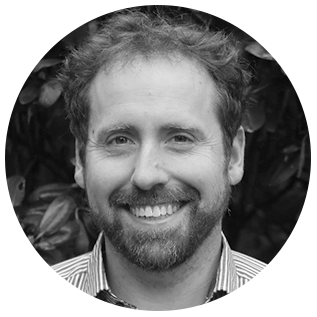
Michael Strange
Michael Strange is a radically interdisciplinary researcher with a background in political science. He is interested in various issues related to artificial intelligence, health and healthcare, trade, and migration.

Carin Cuadra
Carin Cuadras’ research focuses on eco-social work and the role of social work in disaster risk reduction and crisis preparedness. She has extensive experience researching how human services organizations address societal diversity and the demands for equal treatment and equality.