
Social investing is gaining momentum worldwide, but in Scandinavia, progress remains slow. There’s a lot of interest, and things are starting to take off here and there, but the question is: when will it really take off here, and what will it take to make that happen?
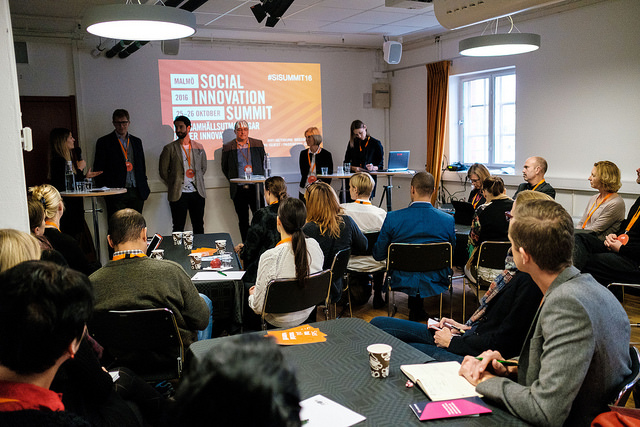
One of the master classes at the Social Innovation Summit took a close look at these very issues, under the expert guidance of moderator Maja Frankel from Ashoka. The panel included: Lars Jannick Johansen and Anne Skovgaard from Den Sociale Kapitalfond in Denmark, Henrik Storm Dyrssen from Leksell Social Ventures, Robert Vass from Almi Invest, and Cecilia Kragsterman from CKCC Catalyst for Change.
After the panelists introduced themselves, they were all given the opportunity to answer the question of when the breakthrough might occur and what obstacles might be preventing social investments from gaining widespread acceptance.
“The breakthrough is here! We already have green investments and microloans, so why shouldn’t we be able to invest in combating social exclusion, for example? So depending on what we mean by social investment, the breakthrough is already here,” said Lars Jannick Johansen.
There is a shortage of contractors
Henrik Leksell, for his part, suggested that one reason why not much has happened yet might be that there aren’t that many entrepreneurs who can make the cut.
“We’ve looked at 400 entrepreneurs, but haven’t invested in any of them yet, because we felt they didn’t have a market. What we’re doing instead, while we wait to find entrepreneurs to invest in, is supporting the purchasing power for social innovation, so that better and better cases can emerge. And we definitely see the potential growing,” he said.
Robert Vass didn't quite agree and explained that Almi Invest invests in an average of one new company every week, some of which are social entrepreneurs.
Social benefits versus economic growth
“What we’re seeing, however, is that the link between social benefit and sustainable economic growth is often missing. If more people could see that link, I believe that both the capital and the will are actually there. Many people truly want to contribute to greater inclusion and social benefit,” said Robert Vass.
Cecilia Kragstermans didn't quite agree:
– It is certainly possible to combine economic growth with social good! There is no contradiction between these two concepts; rather, I would say that they are essential for companies to grow. But I think there’s a lot that goes unnoticed; there are many entrepreneurs who don’t even realize they’re social entrepreneurs. And then there are many driven social entrepreneurs who lack business acumen and knowledge of how to build a sustainable business. So, to some extent, the breakthrough is already here, but it needs to come to the surface, she said.
Lacks measurement tools
Anna Skovgaard agreed that many social entrepreneurs lack the tools to measure the socioeconomic impact of their businesses. The Social Capital Fund is currently working on calculating exactly that, in collaboration with a number of Danish municipalities.
When the panelists were asked to name role models to draw inspiration from while awaiting a breakthrough, suggestions included microfinance and the collaborative economy. And when it came to what else would be needed to make things happen, there were calls for greater government focus on these issues as well as a wider range of intermediaries, somewhat like in the UK. Getting philanthropists and investors to work together was another request.
"What responsibility do you yourselves have? How can we speed up the process?" Maja asked.
“We need more high-risk investors, such as the Norrsken Foundation. And we need more success stories to highlight. Perhaps they’re among those who don’t even realize they’re social entrepreneurs? We also need to get better at communicating our message and creating a language that more people can understand. If we succeed in this, we’ll achieve a breakthrough,” said Henrik Storm Dyrssen.
“We need to do a better job of highlighting both best practices and the facts and figures that showcase the industry—for example, to politicians and the media. We also need to develop a shared perspective and a common approach to how we measure and evaluate societal benefits,” said Anna Skovgaard.
“We have a responsibility to say no. Good ideas aren’t enough; they also have to be financially viable in the long term. We need greater clarity here about what constitutes the nonprofit sector and what constitutes ‘business.’ In addition, I believe in highlighting and celebrating the investors who are out there, so that they become visible. If we let them serve as role models, more people will follow suit,” said Lars Jannick Johansen.
Photo: Håkan Röjder
See more photos on Flickr