
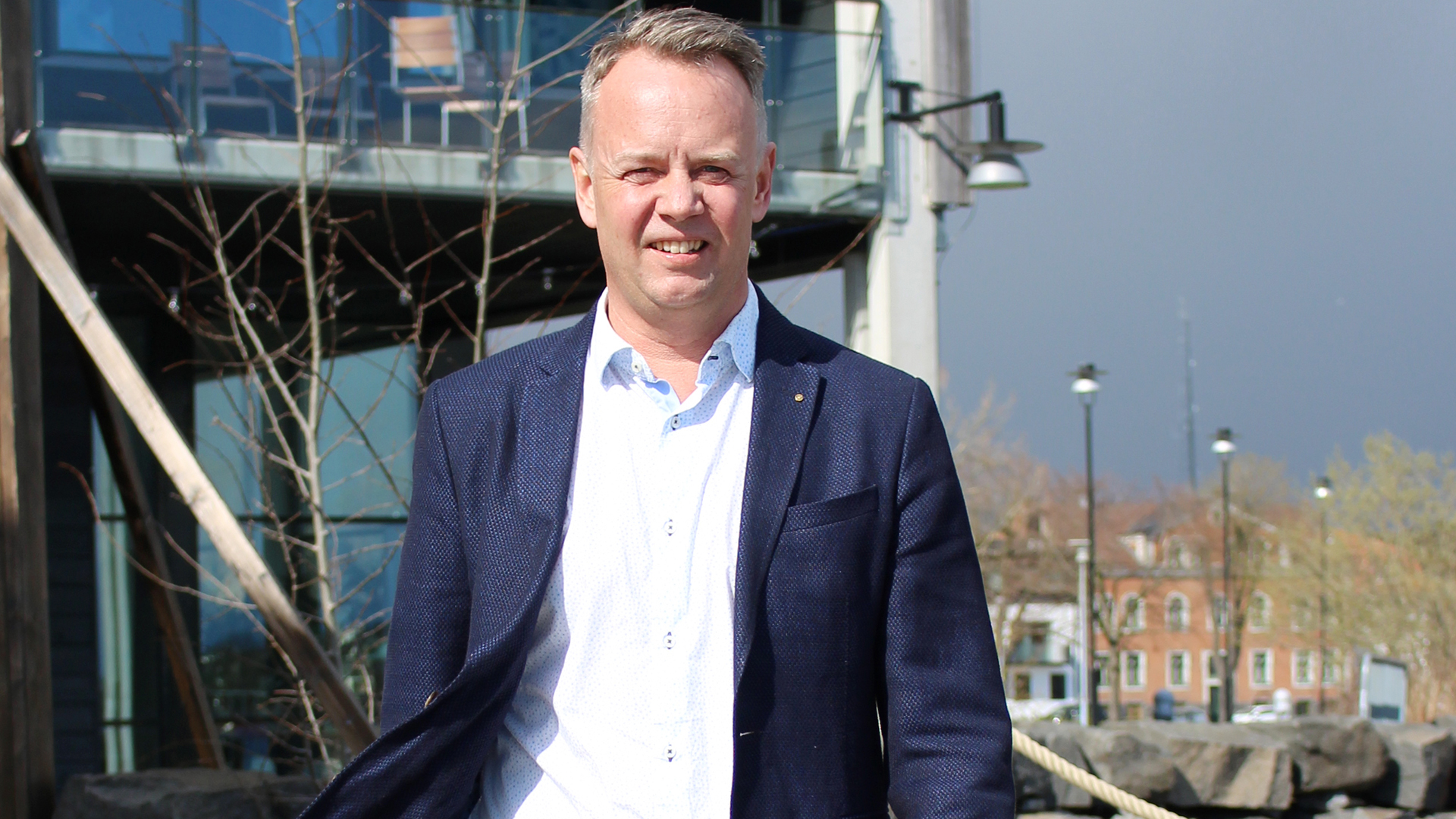
A couple of decades ago, Karlshamn, like many other Swedish cities, was an industrial town. But today, things look quite different in Blekinge’s innovation hubs. Powerful initiatives from the public sector and the business community, along with the establishment of Blekinge Institute of Technology (BTH), have attracted knowledge-intensive companies—such as gaming firms and edtech companies—to set up shop and grow in these cities. Niclas Melin from NetPort Science Park in Karlshamn discusses their strategies for driving innovation. The key? Reskilling and cross-sector collaboration.
NetPort Science Park was founded twenty years ago with the aim of revitalizing Karlshamn. The city has a history as a heavy industrial community, but the goal of NetPort Science Park was to attract service and knowledge-based companies. The result was a so-called “triple helix” collaboration, in which the public sector, academia, and the business community joined forces to create something new.
“Our job is to contribute to social good and growth, and I sometimes think—perhaps a bit simplistically—that this is a way to describe the field of social innovation. That’s what should drive us: making society better while also stimulating growth in the region,” says Niclas Melin.
Today, Niclas Melin works to create and develop partnerships to drive regional and national change processes related to social innovation. Under the title “digital cultivator,” this spring he has been involved in, among other things, Forum for Social Innovation Sweden's “Re-Act” Forum for Social Innovation Sweden's , a digital series that highlights the value of reskilling in times of crisis and rapid change.
– We’ve been active in the same circles as Forum for Social Innovation Sweden, and during our many meetings we’ve always had very interesting discussions related to urban transformation, reskilling, and lifelong learning. This past spring, we felt we should do something together to bring this issue to the forefront, and we began making plans for a knowledge alliance.
Reskilling and lifelong learning – one of Forum for Social Innovation Sweden focus areas
This spring, Forum for Social Innovation Sweden has been Forum for Social Innovation Sweden on several different themes related to crisis-driven social innovation. One of these themes has been “reskilling and lifelong learning,” carried out in collaboration with NetPort Science Park and Region Blekinge. On September 24, the third and final part of the series will take place under the heading “Can the crisis be a springboard for systemic change?”
“Together, we’ve done something completely new, and I think it was bold of us to dare to implement an untested format in an untested context. We’ve learned so much along the way, and we’ve strengthened the trust between our respective organizations,” says Niclas Melin.
It was through a collaboration between Forum for Social Innovation Sweden, NetPort, and Region Blekinge that the idea of highlighting reskilling and lifelong learning as the theme was born. The crisis has simply forced companies, organizations, and individuals to do new things in new ways, and there was a shared need to highlight innovative working methods and showcase new ways of organizing during the crisis.
“We all know that a crisis will eventually pass, but the most important thing is the lessons we learn. How can we identify ways to improve after the crisis? But perhaps also things we can learn to put to use even while the crisis is still unfolding,” he says.
At the same time, Niclas Melin also wants to point out that “reskilling” is a difficult concept.
– Not everyone understands what reskilling actually is, and that’s something I’ve learned. We need to use inclusive language when we talk about these issues. Especially now that we’re transitioning to digital methods and have the opportunity to include even more people in the field of social innovation.
Goals and Expectations for Re-Act 3
Ahead of the final installment in the series of discussions, Niclas Melin hopes to help drive progress by assisting webinar participants in identifying opportunities for their companies and organizations to move in a desirable direction.
“I’m looking forward to a conversation where we can highlight the fact that we’re in the midst of a crisis whose duration is unknown. How can we use this window of opportunity to build the kind of society we actually want? The focus must be on sustainability—and we want to offer practical insights into how organizations and individuals can take action,” he says.
Register for the Re-Act webinar, Part 3:
Don’t miss the third and final part of “Re-Act: A digital discussion series on reskilling, transition, and collaboration in times of rapid change” on September 24 from 9:00 to 11:00 a.m.
Sign up here: https://re-act-del-3.confetti.events/