
It began with a Co-Lab between Forum for Social Innovation Sweden five libraries in Skåne. The next step was a deeper collaboration and a Co-Lab with Kultur Skåne’s library developers. The idea is to strengthen the libraries’ role as open forums for addressing societal challenges, where they, among other things, help guide visitors through the community.
“We needed to improve our grant process and revamp our strategic planning. It felt natural to continue working with Forum for Social Innovation Sweden, which was already familiar with our operations. We wanted our efforts to have a dynamic impact,” says Anneli Krell, library developer at Kultur Skåne.
The “internal” Co-Lab, in collaboration with the library developers at Kultur Skåne, was carried out during the fall of 2016. One of its tasks was to develop the grant application process—that is, the calls for proposals issued by Kultur Skåne to libraries in Skåne.
Work more strategically
Another key focus has been on exploring how Kultur Skåne could work more strategically with learning and knowledge sharing, and on making this a clear part of the grant process. Learning could take place both between different libraries and between local libraries and the regional level. One idea is to revamp reporting formats so that they better promote learning.
Kultur Skåne will also offer support initiatives in which librarians share their project experiences through videos, images, and text, among other formats. Another initiative is to establish a pilot program designed to make it easier for libraries with fewer resources and less developed ideas to apply for funding. In the fall of 2016, Skåne’s Cultural Committee decided to grant a mandate to continue working in this manner.
Open space
“The meetings and discussions we’ve had in our Co-Lab have created a space for us to breathe. Here, we’ve been able to step away from our daily routines, reflect on our work, and explore and develop new ideas,” says Ann Lundborg, library developer at Kultur Skåne.
The role of libraries has been debated for many years and for various reasons in many municipalities. In the fall of 2015, the issue came to a head: when the wave of refugees reached Skåne and the rest of Sweden, it sent ripples through many libraries. As one of the few open and accessible public spaces, daily life at many libraries changed. Was it time to take on a larger and, in some ways, new role?
Addressing societal challenges
Among the projects receiving grants from Kultur Skåne in 2017 are several initiatives aimed at addressing various social challenges, including engagement with language groups other than Swedish speakers. Some libraries have chosen to collaborate with other professional groups, such as social workers. Others are tackling these challenges on their own, but with a fresh approach. Language cafés, homework help, reading circles for women whose native language is not Swedish, and a film club designed to help participants get to know their hometown through film and reading in multiple languages are just a few examples of what is happening in Skåne this year.
At the meeting in Malmö, Per-Anders Hillgren gave a brief overview of the work being done with Co-Labs.
– Libraries are important. You are an open institution, close to the public. In the Co-Lab we conducted with our five pilot libraries a few years ago, they had the opportunity to try working within a design process—that is, using an experimental approach. It’s important to be able to experiment without knowing for certain what your initiative will lead to. But you have to arm yourself with patience, have a good support structure, and let that experimental mindset become part of your day-to-day operations. Learning from one another is also part of the approach, he said.
Facts
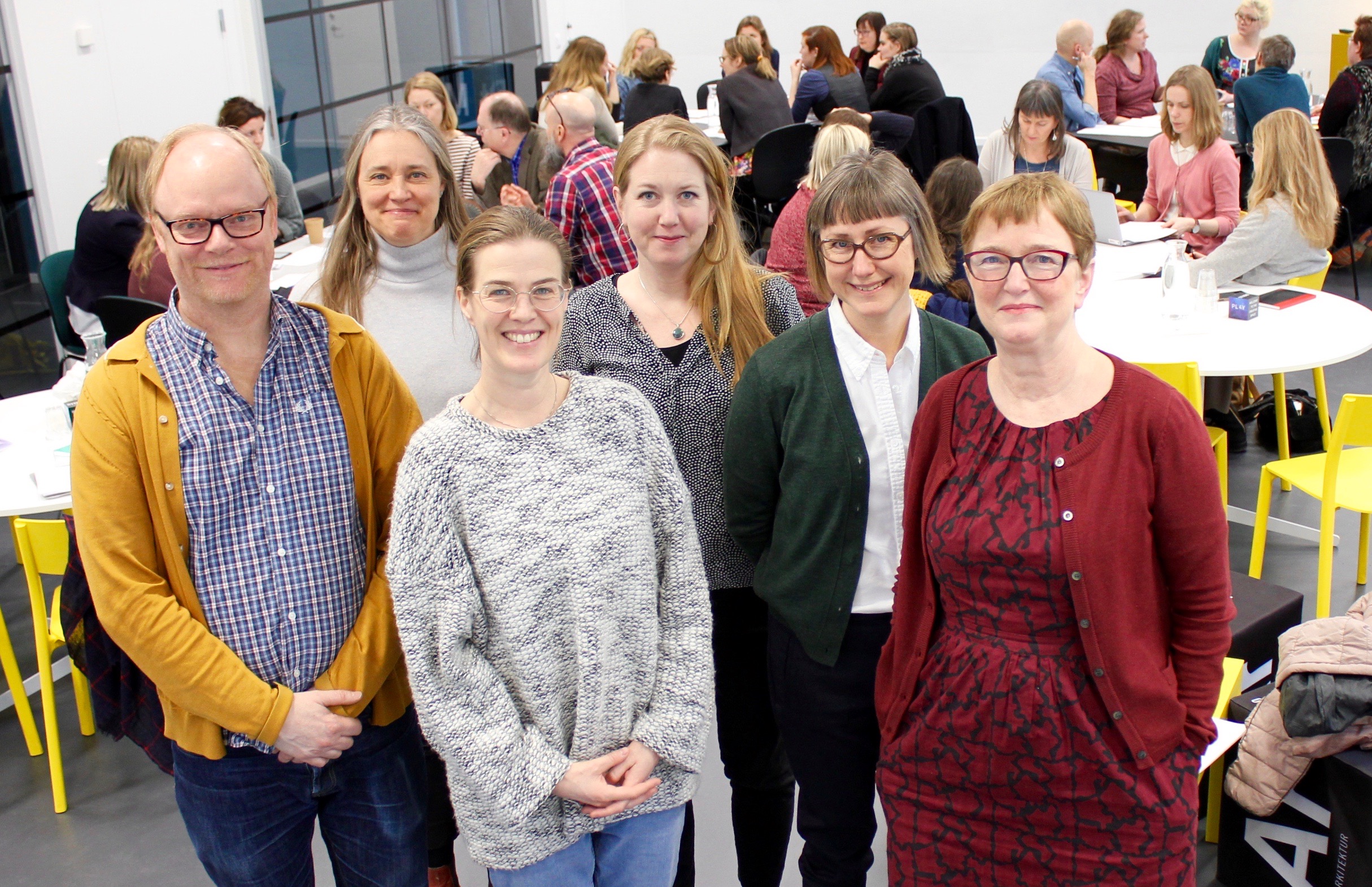
The following library developers from Kultur Skåne participated in the Co-Lab in the fall of 2016: Annelie Krell, Ann Lundborg, Karin Ohrt, Christina Gedeborg Nilson, and Annelien van der Tang. Per-Anders Hillgren and Mette Agger Eriksen represented Forum for Social Innovation Sweden.
Read about previous Co-Lab events
Q&A about the Co-Lab concept