
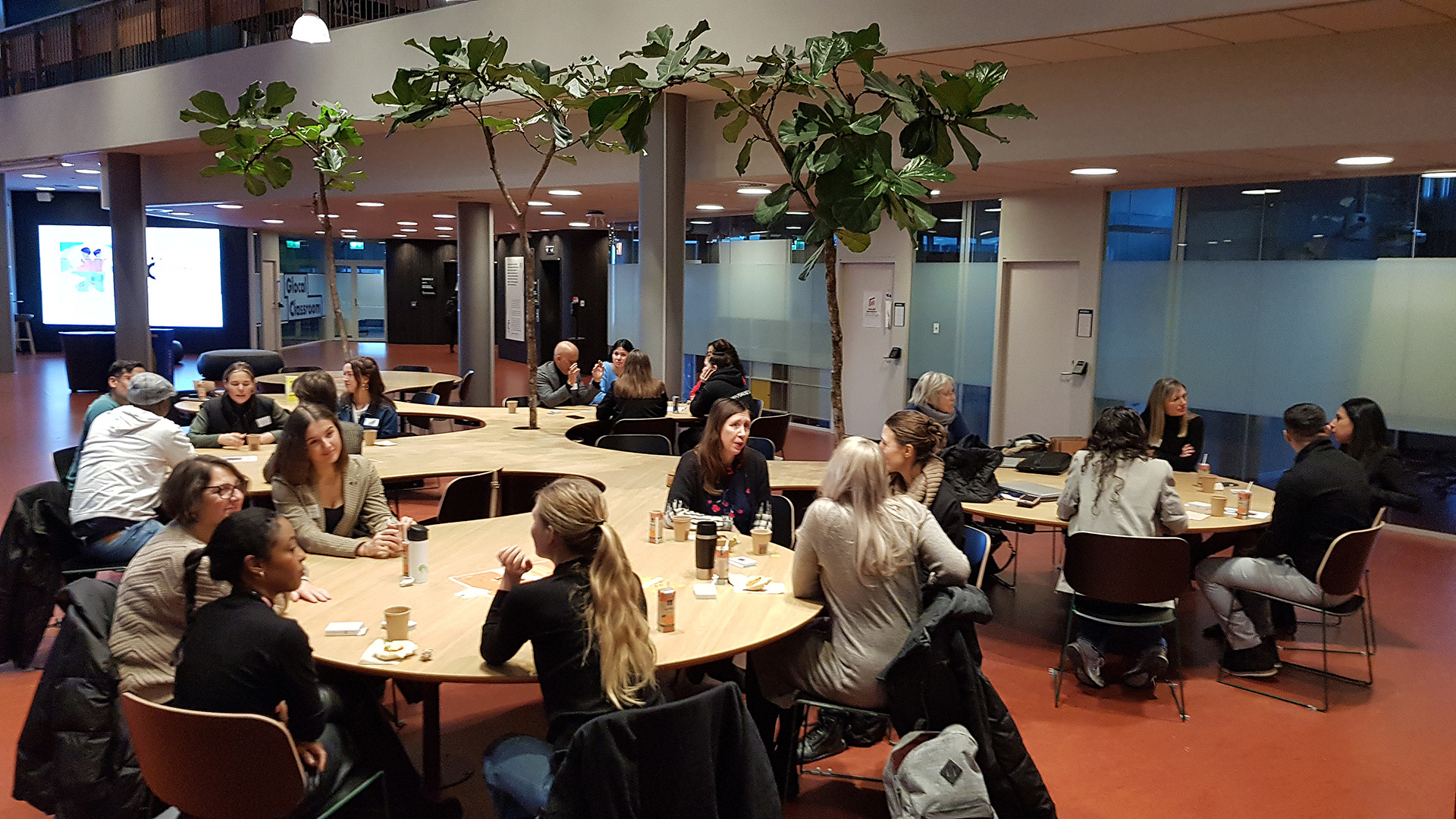
Although there are several UN resolutions calling for the involvement of young people in peacebuilding, significant challenges remain. Youth participation needs to be strengthened both in Sweden and internationally. During a networking event, various examples were highlighted of strategic initiatives to empower young people in peace work. The meeting was organized by Forum for Social Innovation Sweden Malmö University.
This December marks seven years since the UN Security Council adopted Resolution 2250 on youth, peace, and security. The resolution highlights the importance of involving young people in peacebuilding efforts and of focusing on prevention as well as protection and reintegration once a conflict has been resolved. Although there is a clear mandate to involve young people in this work, significant challenges remain.
The goal of the networking event was to spark a conversation about how, with innovation and collaboration as guiding principles, more young people can be empowered to participate in peacebuilding efforts. Julius Kramer, the UN’s Youth Peace and Security Adviser, based in Somalia, was the keynote speaker. He believes there are significant structural and systemic challenges when it comes to strengthening youth participation in these types of processes.
“Although Somalia has a very young population, there are political, social, and cultural barriers that exclude young people from these issues. I believe it will take generations before we see a change in these exclusionary and conflict-fueling power structures, and here at the UN we have a clear role to play,” he says.
Julius Kramer’s mission focuses in particular on ensuring that the UN, as an organization, creates opportunities for youth participation in the areas where it operates, and for him, it goes without saying that structured and systematic efforts are needed at all political levels to bring about change. Not least, this involves models and methods that can facilitate collaboration and involve more actors when it comes to peacebuilding efforts.
The need to address peacebuilding issues in Sweden
Sarah Dolah, who oversees the DPC method at Fryshuset, was one of the panelists. She is one of the people working to take a structured approach to peacebuilding issues in Sweden. For some time now, Fryshuset has been working with a model designed to empower young people and increase their participation in conflict management and peacebuilding—Dialogue for Peaceful Change. The model is a five-day training program and was developed by international experts in mediation and conflict management at the Corrymeela Peace Center in Northern Ireland.
“Many people think that these efforts aren’t needed in a country like Sweden, but that’s simply not true. There’s a great need to address these kinds of issues right here at home, because who are we to tell others how to work for peace if we don’t do it ourselves?” says Sarah Dolah.
Sakariya Hirsi from the organization Kollektiv Sorg, Nicolas Lunabba from the organization Helamalmö, and Yara Tag-Eldeen from the Psychological Defense Agency also participated in the panel discussion to discuss various types of strategic initiatives aimed at empowering young people in peacebuilding efforts.
Need to approach challenges in different ways
Klara Persson and Linda Lemheden, who work on youth issues in the municipality of Svedala, were two of the participants at the networking meeting:
“Listening to the panel made me realize that we face so many shared challenges, but also challenges that differ from one another. We need to address these issues in so many different ways,” says Linda Lemheden.
Together with Klara Persson, she is in charge of a youth policy program in Svedala, where they have been tasked with ensuring that young people’s voices are heard. The long-term goal is to help young people realize their own potential and role, and the discussion at the networking meeting was inspiring.
“For me, it’s empowering to attend a networking event and feel a sense of connection with others who are working on similar issues. It actually makes me proud to feel that the work we do is important. Running a safe space for young people is, in a way, a peace-building effort in itself,” says Klara Persson.
Learn more about Fryshuset’s work and Dialogue for Peaceful Change here.
Read more about Collective Grief here.
Learn more about Helamalmö here.