
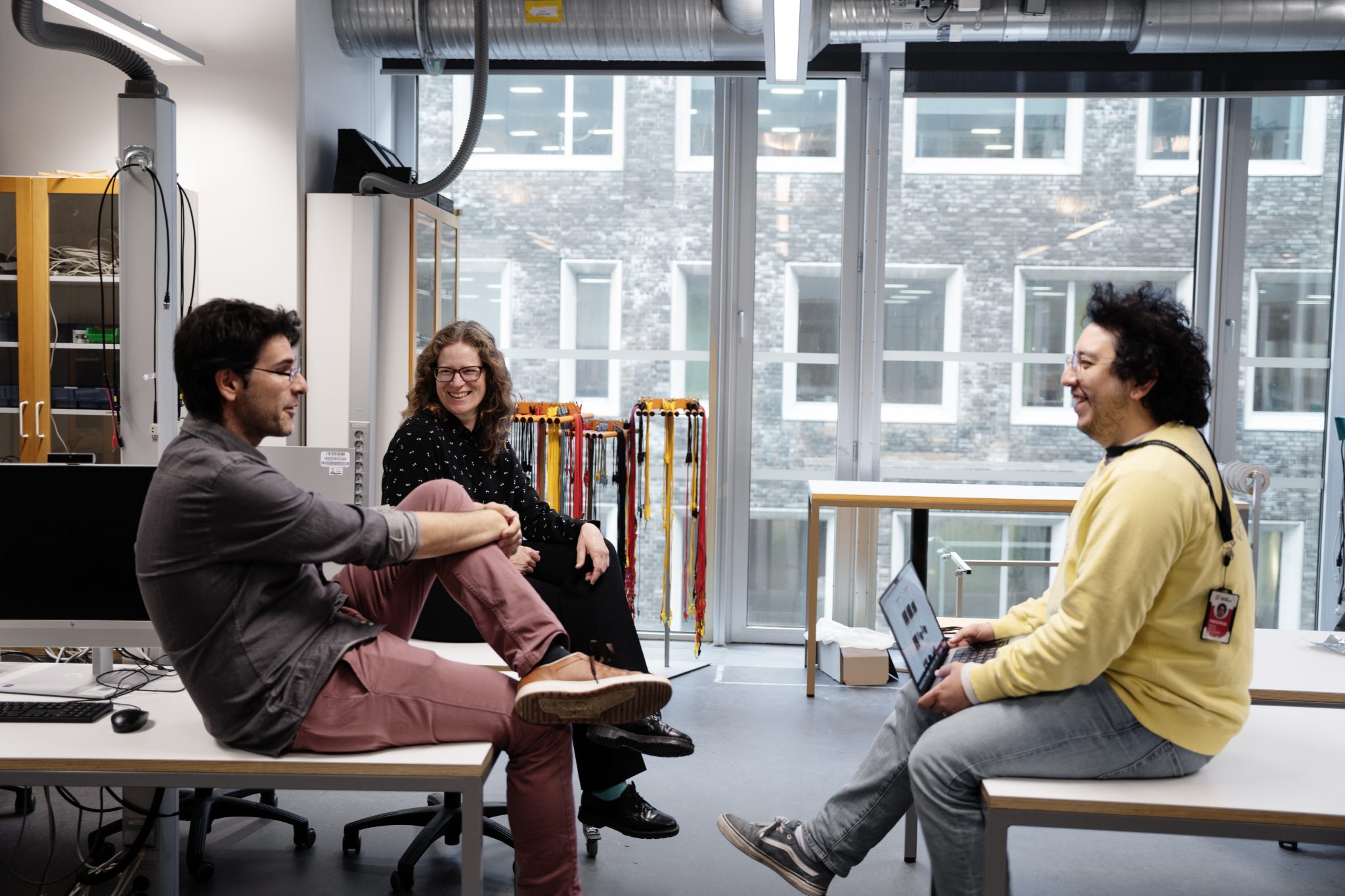
In January, researchers leading Forte-funded research projects together with societal actors. The aim was to exchange knowledge about co-creation. The meeting is part of a learning process led by Forte in collaboration with Forum for Social Innovation Sweden at Malmö University.
Swedish and European research policy calls for research conducted in collaboration with societal stakeholders, as this is believed to enhance the quality, relevance, and impact of research. A more in-depth form of collaboration is what Forte refers to as co-creation, in which societal stakeholders and those who will use or benefit from the research results are actively involved in several stages of the research process.
To gain a better understanding of how co-creation is implemented in practice, Forte has launched a collaboration with Forum for Social Innovation Sweden at Malmö University, which will run through 2026.

“Researchers, universities, and funding bodies all need a better understanding of how co-creation can be implemented in practice while safeguarding the statutory freedom of research,” says Malin Lindberg, visiting professor of social innovation at Malmö University, who is leading the learning process together with Anna Tengqvist, coordinator at Forum for Social Innovation Sweden.
Annelie Sundler, professor of nursing science at the University of Borås, and Kettil Nordesjö, associate professor of social work at Malmö University, are also participating in the learning process.
Greater knowledge and ongoing development efforts
The learning process is intended to enhance the knowledge of researchers and research funders and provide a basis for continued development work within Forte.
“Our collaboration with Forum for Social Innovation Sweden part of Forte’s ongoing efforts to create the conditions necessary for the research we fund to be put to practical use. We are strong believers in co-creation as one of several tools for achieving this goal. At the same time, these learning sessions provide a great opportunity for researchers to exchange experiences and learn from one another,” says Anna-Karin Florén, research secretary at Forte.
A three-part learning process
The process consists of three parts. The first part is a follow-up to three Forte calls for proposals that called for collaboration and co-creation. The second part consists of learning sessions with research projects funded by Forte. The third and final part is an evaluation of collaboration in the calls for proposals. The three Forte calls covered are: Applied Welfare Research 2022, Children and Youth Mental Health 2022, and Co-creation for Sustainable Work Life Development 2023.
In the follow-up to the first phase, conducted in 2024, Forum for Social Innovation Sweden examined Forum for Social Innovation Sweden and co-creation in Forte’s call for proposals process and call texts, as well as in the applications received and those approved, and the review panels’ statements.
“Among other things, we see that the more clearly collaboration and co-creation are called for and described in the calls for proposals, the more these concepts and approaches are used in applications and evaluations,” says Malin Lindberg.
Knowledge exchange among researchers
In the second phase, an initial learning session is now being held with researchers who have received funding through one of these calls for proposals. During the session, the researchers will have the opportunity to share their knowledge about co-creation with one another, which will also be utilized to support continued learning throughout the process.
“We look forward to hearing more directly from the researchers about their experiences running these co-creation projects, and to addressing the opportunities and challenges they describe,” says Anna-Karin Florén.
Collaboration and co-creation in research take many forms
The third and final section evaluates collaboration and co-creation in Forte’s calls for proposals. The requirements for co-creation and how societal actors should be involved are outlined in the information text for each call.
Collaboration and co-creation can be part of one or more stages of the research process. The more stages in which stakeholders are involved, the greater the degree of co-creation. The appropriate degree is determined by the research project’s purpose and design.
However, collaboration and co-creation do not follow a fixed model or set of methods. For example, they can take place when stakeholders serve on a project advisory group or as members of the project team. According to Forte, simply involving partners as subjects of study and contributors of data does not meet the criteria for collaboration.
“It’s important to be able to determine when collaboration and co-creation are appropriate, to what extent and in which phases, as well as which methods and motivations to use,” says Malin Lindberg.
Text: Lotta Orban