
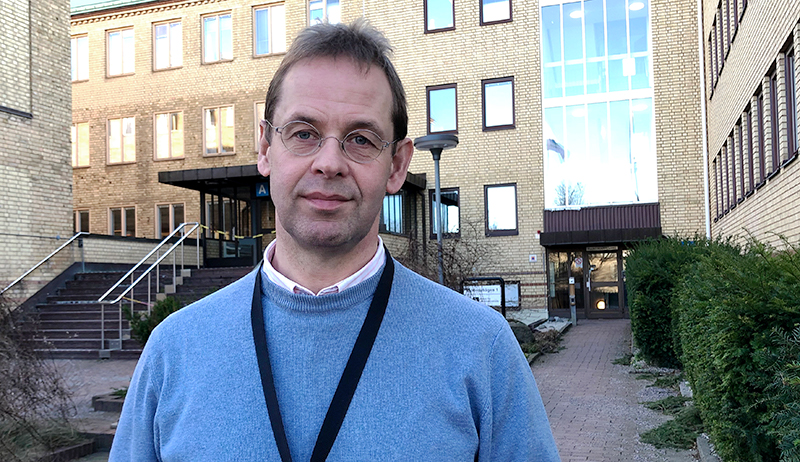
Swedish municipalities and regions are not doing enough to collaborate with social enterprises. “We need to find new ways to address the challenges facing the welfare system, and social enterprises could be one way forward,” says Anders Bro, who has been commissioned by the Swedish Association of Local Authorities and Regions to write a handbook on the subject.
Anders Bro is the development manager at Region Örebro County and the project manager for the region’s work on social innovation. He is also involved in several international projects focused on social innovation and social entrepreneurship, and believes that Sweden lags behind many other European countries in this area.
“We have a fairly long tradition in Sweden of working with social enterprises that promote employment, where the goal is to bridge the gap to the labor market for people who have been unemployed for a long time. But the definition of social enterprises is much broader than that,” he explains.
These may be businesses that work toward socially beneficial goals, such as improving the climate, contributing to a safer living environment, or reducing social exclusion. Social enterprises are also characterized by the fact that their surplus is often reinvested in their own operations or in a new socially beneficial project, rather than being paid out as profits to the owners.
Many challenges facing municipalities and regions today
On behalf of the Swedish Association of Local Authorities and Regions (SKR), Anders Bro has now begun work on creating a handbook for municipalities and regions, designed to promote their collaboration with social enterprises.
And there are many challenges, he says.
– Many municipalities do not have these issues on their agenda at all. And even when they are, they are often not given very high priority. There is a lack of policy documents and clear action plans, and in many places there is no coordination of how work with social enterprises should be carried out.
By highlighting best practices from across the country, Anders Bro hopes to provide both inspiration and practical knowledge. This might involve demonstrating what a successful public procurement process looks like, providing examples of how a municipality or region has organized itself effectively, and offering concrete examples of public-private partnerships and successful collaborations with social enterprises.
What are the benefits for municipalities and regions that choose to work with social enterprises?
“Everyone knows that we’re facing major societal challenges and that public sector resources are limited. Everyone is also aware that we need to find new ways to address welfare challenges, and collaboration with social enterprises could be one way forward,” says Anders Bro.
The project is funded by the Swedish Agency for Economic and Regional Growth, and the handbook is scheduled to be completed in October.
What is an Ideological Public Partnership (IOP)?
IOP is a partnership between the public and nonprofit sectors. The partnership is designed to support initiatives that help address some form of societal challenge. The model was developed in 2010 by Forum – Nonprofit Organizations with a Social Focus, which is the trade association for nonprofit organizations with a social focus.