
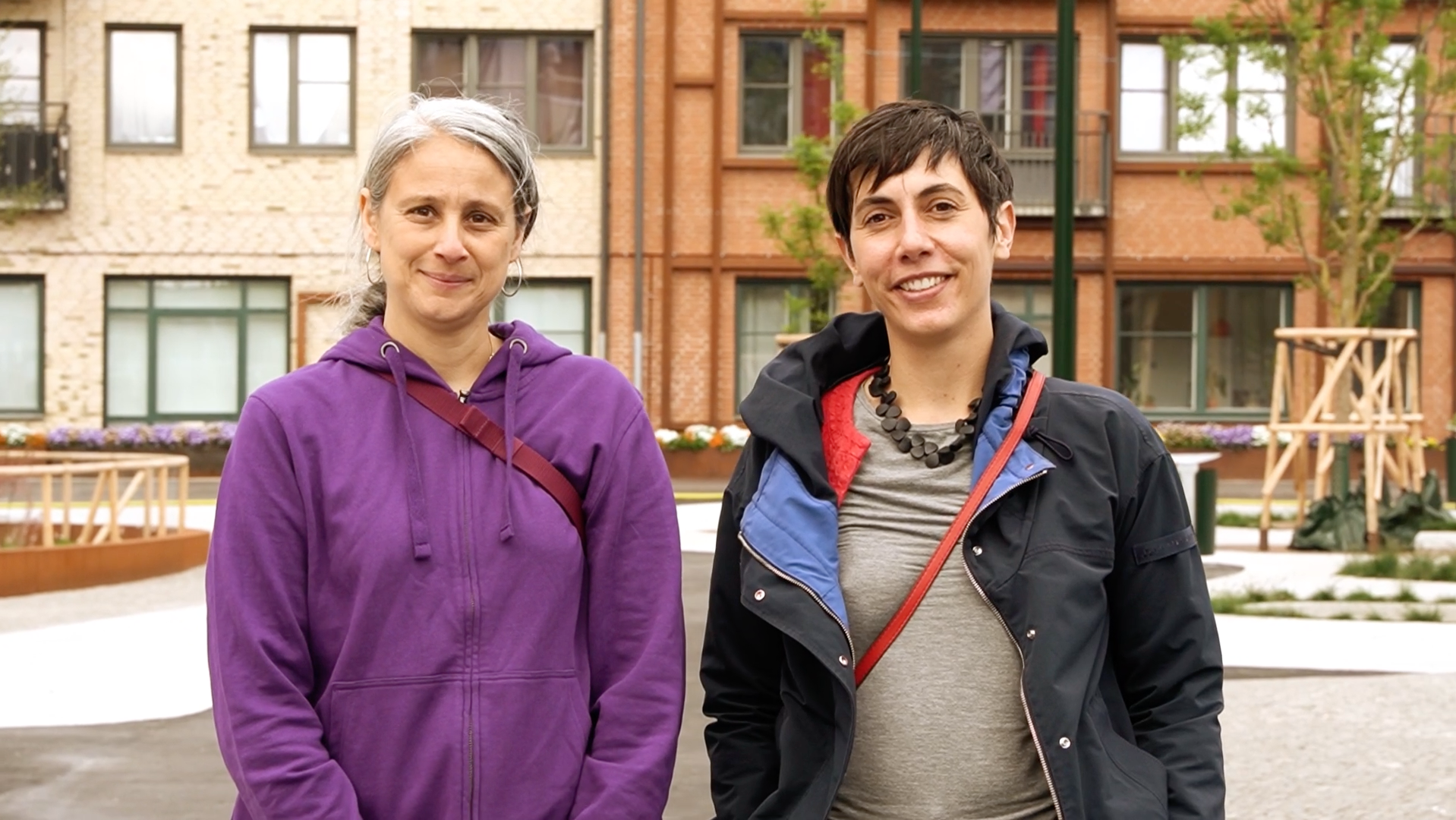
Anna Seravalli, a researcher at Malmö University, has collaborated with Savita Upadhyaya, a development engineer at VA Syd, to develop new services and approaches aimed at advancing waste reduction.
“To promote a sustainable society, we need cooperation between residents, various professions, organizations, and sectors, as well as structures that enable municipal organizations to adopt new working methods on a long-term basis,” says Anna Seravalli.
Every year, the city of Malmö grows by about 7,000 residents. This means that an additional 500 kilograms of waste is generated per resident—waste that needs to be reduced instead. At the EU and national levels, there are requirements to reduce waste volumes, increase reuse, and realize the circular economy.
VA Syd is responsible for municipal waste collection for 340,000 customers in the City of Malmö and the Municipality of Burlöv. To minimize the amount of household waste in the community, VA Syd aims to lead the way in municipal waste management and to explore and test new approaches in order to develop the most resource-efficient and innovative services for households.
“To successfully drive waste reduction, we need to work on two fronts. On the one hand, we need to work on changing residents’ behavior. On the other hand, we need the ability to develop innovative services. Both of these require a radical shift in perspective, methods, and working practices,” says Savita Upadhyaya.
Launched Sweden’s first hub for reuse and waste sorting
Since 2014, Malmö University and VA Syd have been working together to develop new services and approaches to advance waste minimization. In 2015, VA Syd, Sysav, Stpln, and the City of Malmö, with support from Malmö University, launched Sweden’s first hub for reuse and waste sorting, Returen in Lindängen. The initiative aimed to promote reuse and repairs, as well as facilitate waste collection in the city. Here, local residents could participate in creative workshops, fix something in the workshop, swap items in the free shop, and meet others over a cup of coffee in the café. Returen’s operations in Lindängen, in the form they have taken since the start, were discontinued at the turn of the year 2021/2022. Parts of the operations will continue to be run by the Lindängen Library.
Everyone must have the opportunity to make sustainable choices
The Returen concept is also used in Sofielund. In the Spårvägen neighborhood is the Returen recycling center. Here, residents of the area can drop off electronics, light bulbs, chemicals, and bulky waste. It is also possible to drop off clothing and small household items at the recycling corner. VA Syd organizes various activities focused on taking care of belongings and reusing what you already have. In addition, VA Syd will be launching Pop-up Returen, a mobile version of Returen.
“We need to work together to make this transition, and everyone must have the opportunity to do the right thing when it comes to waste management and reduction. Returen serves as a hub for spreading knowledge about sustainability. It’s exciting to see firsthand how we can give our apartment-dwelling customers the opportunity to make sustainable choices,” says Savita Upadhyaya.
Municipal organizations need to adopt new, innovative working methods
Anna Seravalli and Savita Upadhyaya have also worked internally at VA Syd to enhance the organization’s capacity to address the challenges posed by waste minimization.
“We worked together to develop new ways of working and organizing work related to the development of new services. Municipal organizations need to strengthen their ability to adopt new working methods over the long term,” says Savita Upadhyaya.
Spaces and methods for experimentation, learning, and listening are needed
In collaboration with Malmö University, VA Syd has developed a concept, an organizational model, and working principles for a service development process within municipal waste management organizations called the Innovation Lab for Waste Minimization (ILA).
– The lab aims to create a framework for develop new services to increase resource efficiency in waste management and promote organizational learning regarding new working methods, such as citizen engagement and collaboration, says Savita Upadhyaya.
As a design researcher, Anna Seravalli uses participatory and collaborative design methods to drive learning processes within the public sector and institutions. By bringing together different actors and stakeholders across various sectors and professions, co-design processes not only bring together different types of knowledge but also create opportunities for the collective articulation of problems and needs and for mutual understanding.
“We need to create space and provide support for learning processes that focus on experimentation and exploration of issues and new solutions within the public sector. By listening to the needs of our operations and our citizens, we can build on past experiences and identify ideas for improvement,” says Anna Seravalli.
Facts
Returen
Returen is a neighborhood-based recycling center with a strong focus on reuse and on spreading knowledge and understanding about waste and reuse. Its primary target audience is residents of apartment buildings who do not own a car.
Innovation Lab for Waste Minimization (ILA)
VA Syd’s goal is to minimize the amount of household waste in the community. One way to achieve this is to improve collaboration with community stakeholders and enhance the organization’s ability to create new solutions and services that promote more sustainable behaviors. To achieve this, new ways of working, methods, and knowledge environments are needed to enable development, testing, and learning. The Innovation Lab for Waste Minimization (ILA) project has aimed to develop an organizational model and working principles for a service development process.