
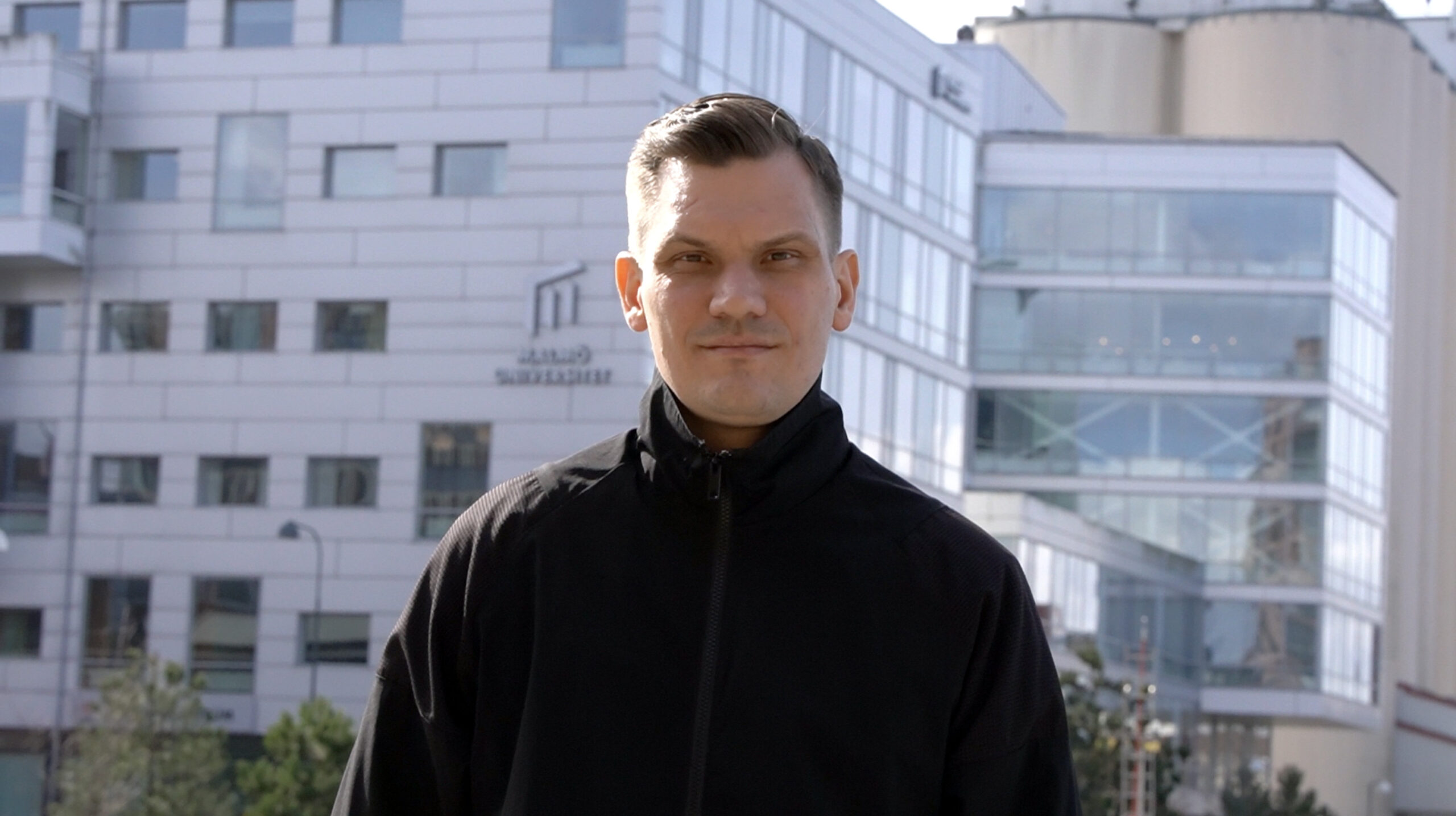
Robert Nilsson Mohammadi, a researcher at Malmö University, has collaborated with cultural workers and civil society actors in Malmö to develop methods for creating, documenting, and sharing conversations with Malmö residents. This enables Malmö residents to take an active role and define for themselves what Malmö is.
Malmö’s identity is a subject of debate. Two dominant narratives about Malmö prevail in the public sphere. On the one hand, there is the image of a frightening city plagued by crime, the black market, and failed multiculturalism. A narrative that portrays Malmö’s residents as a problem for society. On the other hand, an exciting city that is open to the world, with Malmö’s multiculturalism serving as the backdrop to the young, vibrant city and middle-class life.
“The voices and stories of many Malmö residents about the past are not given a platform,” says Robert Nilsson Mohammadi.
Malmö Life Stories: A Participatory Oral History Project
So how can Malmö residents change the writing of history and the public narratives about Malmö? For two years, Robert Nilsson Mohammadi has led the research-initiated project Malmö Life Stories with support from the Riksbankens Jubileumsfond. In this participatory oral history project, he has collaborated with Hela-Malmö, Malmö’s Collected Voices (MSR), the Swedish Queer Initiative (SQI), Teater InterAkt, and Tehara Media. Together with Malmö residents, they have explored how residents’ life stories—including experiences of racism and migration—can be used to shape the narratives about Malmö.
“We want to let the people of Malmö define what Malmö is and describe the city from a variety of perspectives,” says Robert Nilsson Mohammadi.
Seeks to create spaces for dialogue and shared learning
They have developed methods for creating, documenting, and sharing conversations with Malmö residents, organized workshops, and founded the cultural association Malmö’s Collective Voices.
“We want to create spaces for dialogue where we can learn from each other’s knowledge. At the same time, we want to develop a new, collaborative approach, democratic working methods, and a deeper understanding of our history, the ethics and methodology of collaboration, urban change, and the creation and amplification of voices,” says Robert Nilsson Mohammadi.
The plan was to secure funding to establish a national training and research center for oral history, where Malmö residents could play an active role not only in cultural life but also in research. The center was to be jointly run by Malmö University and civil society organizations. Unfortunately, the project proposal was not awarded funding this year.
There is a need for a platform for cross-sectoral collaboration
Rena Baledi, who participated in Malmö Life Stories, served as project manager for the Museum of Movements at the start of the project; this was a pilot initiative in Malmö that has since been discontinued.
“In my work, I came into contact with several stakeholders who expressed a desire for a platform and a space where people could come together across sectors and, through culture and other means, ask questions, raise issues, and reflect on various aspects of our city,” she says, continuing:
– Malmö Life Stories demonstrates that cross-sectoral collaboration opens up opportunities to broaden the methods and theories used to address social issues. Through this collaboration, we have been able to think beyond what we typically practice within our respective sectors and organizations.
Lack of opportunities for in-depth discussion
Cecilia Nkolina, artistic director at Teater InterAkt and chair of the association Malmös samlade röster, felt there was a lack of a forum for discussing documentary theater with other practitioners.
“We work with documentaries, process-oriented theater, and community theater, where people with diverse backgrounds collaborate with professionals. This raises many questions and places high demands on ethics. It’s easy to make a misstep,” she says.
– I felt there was a need for a forum where we could have an in-depth discussion about the demands placed on those of us who work in this way—with different stakeholders and different perspectives on the same type of method and activities. Malmö Life Stories felt unique.
What does collaboration with other stakeholders and Malmö University entail?
“The great thing about this collaboration is that it’s very equal. We’re not coming together for someone else’s project, but for a shared one. It’s an equal exchange where everyone has experiences that we can all benefit from. It’s enriching,” says Cecilia Nkolina.
What has Malmö Life Stories contributed to?
– The project has helped bring together many people who otherwise would never have met. Our work has led to the creation of the Malmö’s United Voices association, which includes about 10 active members and collaborates with various organizations.
Have you influenced the writing of history and the public narratives about Malmö?
– Not yet. These are very long processes. The association has received a tremendous amount of attention and is constantly receiving requests for collaborations. There is a great need. The issue feels very relevant to many people.
– Our goal is not to change the narrative, but to supplement narratives that are one-sided, oversimplified, and superficial. Our hope is to counteract this. We need many more stories—a diversity of differences and nuances. We want everyone’s lives to be both ordinary and unique.
The oral history method gives people a voice
Showan Shattak is a program developer at ABF and a board member of Malmö Samlade Röster, and has been involved in Malmö Life Stories from the very beginning:
– Of all the 18 years I’ve spent doing volunteer work, Malmö Life Stories is the most meaningful project I’ve been involved in. There are tremendous opportunities in using the oral history method to give people a voice and capture the stories of Malmö.
– There is such power in personal stories, which collectively paint a picture of what has happened in people’s lives and, from a broader perspective, has shaped Malmö. These stories get under your skin and make the telling of history human, while also keeping it straightforward and honest.
Showan Shattak believes that Malmö needs a gathering place where people of all ages can meet without spending money. A place for conversation, where stories can be shared and Malmö residents can be inspired.
– The goal is for you to learn the oral history method and put it into practice. If you’re interviewed, you’ll gain the skills to interview others yourself.
About Malmö Life Stories
Malmö Life Stories was a participatory oral history project developed by individual actors and civil society organizations in Malmö, cultural workers, and researchers. The approach was inspired by the Montreal Life Stories Project, which was carried out at the Concordia Center for Oral History and Digital Storytelling (CCOHDS) from 2007 to 2012. Malmö Life Stories began in 2020 and concluded in 2022. The project was funded with research initiation grants from the Riksbankens Jubileumsfond.
Collaborative research that is transforming Skåne
This is the final installment in the series “Collaborative Research Transforming Skåne,” which we have produced with support from the Sten K. Johnson Foundation. In this series, we have highlighted collaborations and research projects at Malmö University that are generating positive societal impacts.