
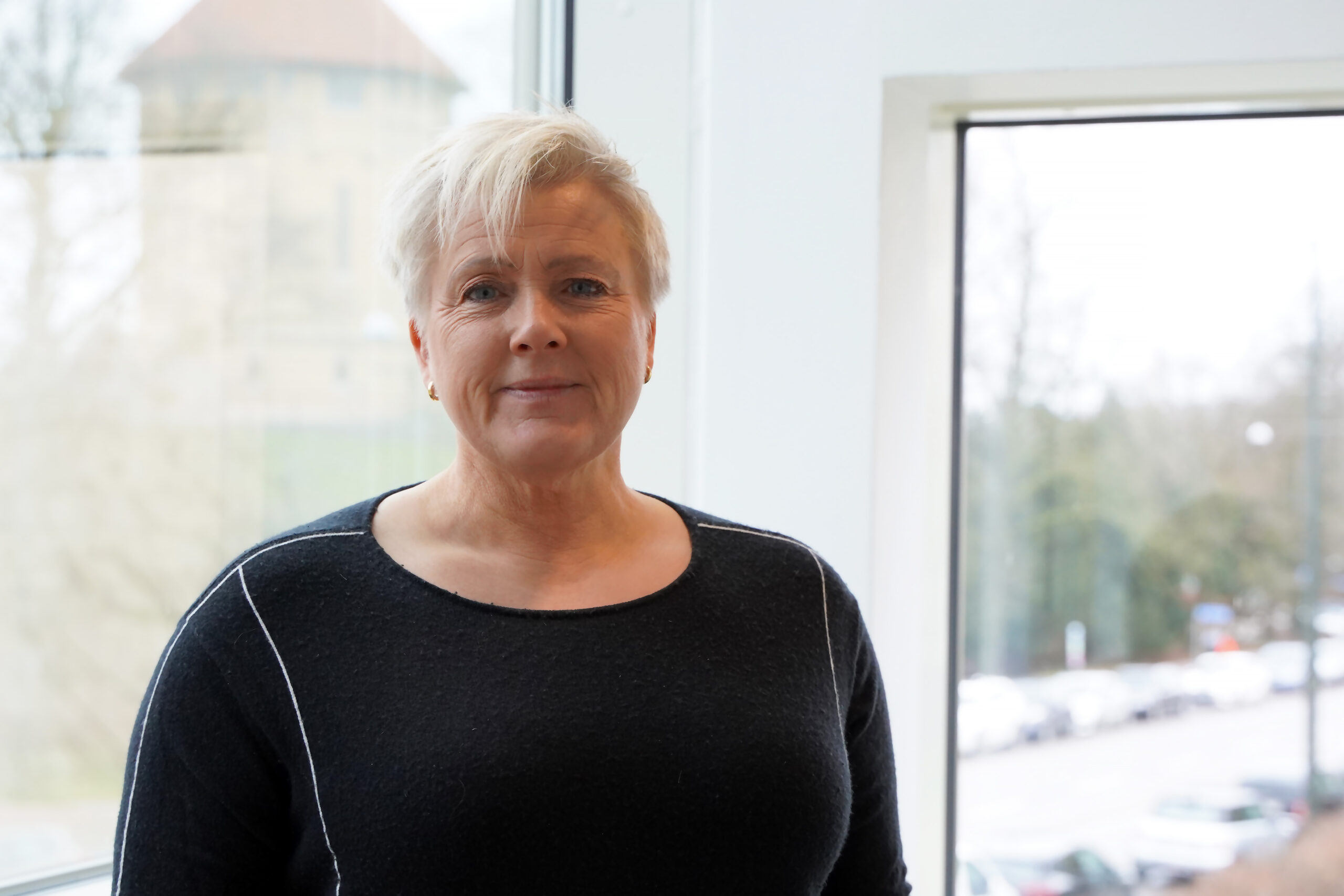
Can an app make it easier for children to talk to social services about their problems? The OmMej app has begun to be used in a few municipalities. Researchers at Malmö University are monitoring its effects in collaboration with researchers at Lund University and Region Gävleborg. The research shows that when children articulate their problems, they get straight to the heart of the matter.
Many children and young people are struggling. At the same time, adults and authorities don’t always feel comfortable asking children what’s wrong. Children’s voices aren’t being heard. And that makes it difficult to provide the right help quickly.
The UN Convention on the Rights of the Child became law in Sweden in 2020. It requires government agencies to more actively comply with its provisions. Among other things, the Convention states that children have the right to actively participate in decisions affecting their lives and to have their voices heard.
It's hard to talk about difficult things with a stranger
OmMej was founded by Nicolina Fransson, along with colleagues who have extensive experience in social work and advocating for children’s rights, to facilitate precisely this. But also to make it easier for adults to understand a child’s perspective.
The developers turned to researchers at Malmö University for help in assessing whether the app is an effective way to address the children’s stories.
– It can be difficult for children to talk about their situation with a stranger. It might be that they’re being bullied at school or that there are problems at home. The idea is that many young people, who feel comfortable with new technology, would rather talk about their lives using an app.
This is according to Nancy Russo, a senior lecturer at Malmö University, who, together with an interdisciplinary team of researchers—including Annika Staaf, a senior lecturer in social work with a focus on law—and Region Gävleborg, has studied the early implementation process. The aim was to determine whether a digital tool supports children’s rights to participation and how it can be integrated into practice.
Adults working in schools, child and adolescent mental health services, and social services may view the responses
In OmMej, children can answer a series of questions about how they’re doing at home, at school, or with friends. Each answer is followed by a series of follow-up questions. Children can also go back and revise their answers. Adults at school, at the Child and Adolescent Psychiatry Clinic (BUP), or at social services can then view the answers. However, only the person who invited the child to the app can read what they write.
“Based on the responses, the social worker can determine what is worth following up on and possibly taking action regarding,” says Nancy Russo.
The app also includes informational videos with age-appropriate information on topics such as the Convention on the Rights of the Child and what a social worker does.
“Children need relevant information to be able to understand and participate in decisions,” says Annika Staaf.
Criticism of child welfare investigations was highlighted in a report
The government report SOU 2016:19, which addresses the incorporation of the Convention on the Rights of the Child into Swedish law, noted that Articles 3 and 12 were not adequately addressed in child welfare investigations and child impact analyses. This was particularly true when it came to investigating and deciding on interventions in cases where a child had witnessed or been subjected to violence.
“The conversations with the children often remained superficial. They stopped short of trying to build a rapport, especially when dealing with sensitive issues. In OmMej, the chat feature allows you to get straight to the heart of the matter because the children articulate the problems themselves,” says Annika Staaf.
Digital tools can break down barriers
Annika Staaf believes it’s a good idea to have this type of digital tool because young people are so used to them. There are several good examples of times when the app has been helpful. For a girl with selective mutism who was struggling in school, the app helped her break through a mental block. OmMej has also worked well for so-called “stay-at-home students.”
The City of Karlskrona has purchased and is using the tool. The plan is for it to be used across the entire administration, from child welfare to adult services. There is still a lot of work to be done to fully implement OmMej, but an increasing number of case workers are using the tool.
“The staff have helped develop procedures for the tool. The staff who have tried it are very positive; they see that the children’s voices are heard more clearly in the assessment, and that the time it takes to start the child interview has been reduced. Less time needs to be spent talking about things like favorite colors and food; instead, the conversation can get right to the point, says Emmeline Tigerman, business developer, Social Services Department, Karlskrona Municipality.
Almost all positive
In this one-year pilot study funded by Forte, researchers interviewed a number of social workers and decision-makers in Helsingborg, Karlskrona, and Hudiksvall—municipalities that have just begun using OmMej.
“We wanted to get a sense of what their expectations were and what barriers might exist. Almost all the social workers were positive. They saw that the children were able to speak for themselves; their voices were heard more clearly. Some children weren’t interested, but others found it very rewarding,” says Nancy Russo.
“Having the tool examined from different angles is beneficial for us. It has also been both educational and exciting to participate in interviews and workshops. If this were to happen again, we would be happy to participate—exchanging experiences and ideas with both researchers and representatives from other municipalities is always thought-provoking,” says Emmeline Tigerman.
The researchers are now seeking funding for a longer-term follow-up study spanning 3–4 years. By taking a longer-term perspective, they aim to investigate whether OmMej makes a difference for the children and how social workers feel about their work. As part of this, the researchers also plan to interview the children.
“We want to use our expertise to help municipalities and government agencies listen to children’s stories. This will ensure that better support is provided more quickly and that children’s participation in democratic society is strengthened,” says Nancy Russo.
Facts: About Me
According to the Convention on the Rights of the Child, which has been Swedish law since 2020, children have the right to actively participate in decisions affecting their lives and to have their voices heard. In addition to Annika Staaf andNancy Russo,the interdisciplinary studyChildren’s Influence and the Right to Participation: Evaluation of the Potential of Digital Tools for Children in Social ServicesincludesJeanette Eriksson of Malmö University,Björn Hofvander of Lund University, and Karin Tillberg Mattsson of Region Gävleborg. The research project is funded by Forte and is a one-year pilot study.