
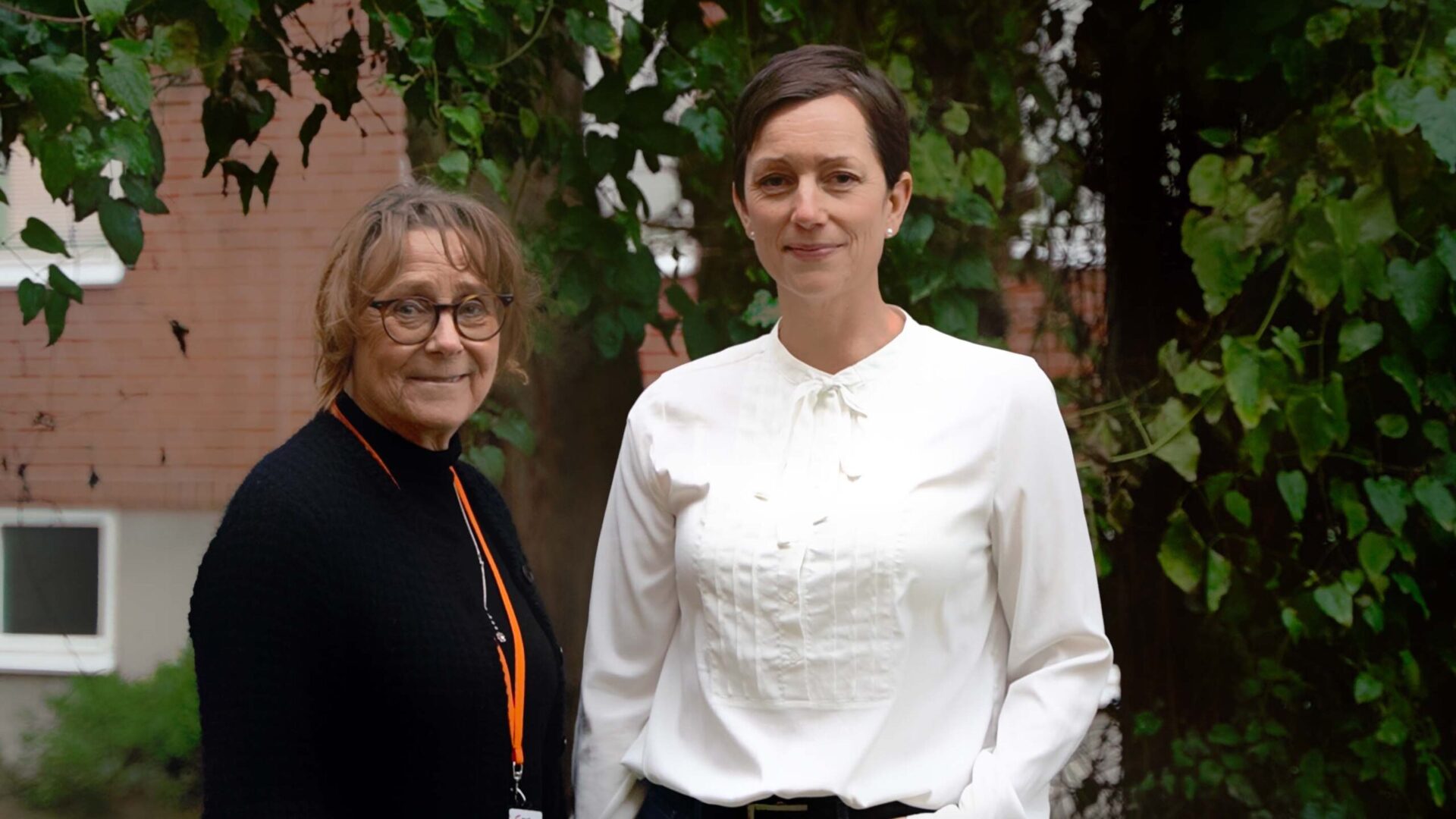
Gunnel Svensäter and Jessica Neilands at Malmö University, together with fellow researchers and the Public Dental Service, aim to revolutionize dental care. Through research and new methods, they hope to detect disease before it develops, direct resources to those most in need, and thereby reduce healthcare costs.
Severe tooth decay and gum disease are among the most common health conditions worldwide. According to recent estimates, at least one billion people are believed to suffer from one of these conditions. This causes discomfort and suffering among children, young people, and the elderly. They are also at risk of losing their teeth.
In Sweden, approximately 10 percent of the population suffers from severe tooth decay or tooth loss. This percentage is expected to rise sharply due to the steadily growing elderly population. There is also some scientific evidence linking tooth loss to an increased risk of cardiovascular disease.
“We want to improve clinicians’ ability to identify patients at increased risk of tooth decay and gum disease. We also want to help reduce healthcare costs by directing resources to those with the greatest need,” says Gunnel Svensäter, professor and research director of the Foresight research program.
Dental care today is unequal
Today’s dental care is unequal and fails to reach those with the greatest need. The dental care system, which currently costs approximately 10 billion Swedish kronor per year, is in dire need of effective tools to identify patients at increased risk of tooth decay or tooth loss.
– “With the risk assessment methods used today, many cases are misjudged. Many patients receive excessive treatment, while those who truly need care are not guaranteed to receive it,” says Gunnel Svensäter.
A multidisciplinary approach is needed
The Foresight research program brings together researchers from Sweden, Spain, Italy, and the United States. Because the research questions are complex, a multidisciplinary approach is required that draws on expertise from various fields of knowledge. Rather than conducting more research within a single field, researchers from different disciplines work together in an interdisciplinary manner.
– “Researchers in Spain study bacteria; they’re the best in the world in the lab, while researchers in the U.S. are good at researching bacterial behavior,” explains Gunnel Svensäter.
Researchers are searching for new biomarkers and developing new methods for risk assessment
The researchers are searching for new predictive biomarkers and preventive biotherapeutics, and are working to develop sensors for these biomarkers, clinically validate them, and apply findings from risk research and health economics to optimize risk assessment.
– “We study bacteria and proteins to find new predictive biomarkers for caries and periodontitis. And we develop and use new methods and tools to detect them,” says Gunnel Svensäter.
A new generation of predictive biomarkers and tools will improve clinicians’ ability to identify patients at increased risk for tooth decay and gum disease.
– “With more efficient methods, healthcare can be reorganized and tailored to patients’ needs, and healthcare costs can be reduced,” says Gunnel Svensäter.
Cooperation with the Public Dental Service is crucial
In their clinical work, researchers need to collaborate with the Public Dental Service, which is unique in that it is an organization with a high patient throughput and a large number of dentists and dental hygienists. The Public Dental Service in Skåne treats 500,000 patients per year and employs just over 550 dentists and dental hygienists.
Folktandvården Skåne contributes to Foresight primarily by collecting patient data through clinical work and microbiological samples. They view the collaboration as strategically important for advancing knowledge.
– “By participating in the interdisciplinary research program Foresight, which involves a variety of stakeholders, we gain access to the latest knowledge in the field and help generate new insights. This helps us, as a dental care provider in Sweden, be perceived as a serious and attractive employer. It will benefit our employees, but above all our patients,” says Henrik Jansson, Head of Specialist Dental Care and Research/Associate Professor, Folktandvården Skåne AB.
“In the long term, I hope we can help develop new and better methods for diagnosing and predicting periodontitis, peri-implantitis, and even dental caries. This could revolutionize daily clinical practice for the majority of our patients,” says Henrik Jansson.
Fact: Foresight
About 40 people are involved in the Foresight project, comprising a total of five research groups from Malmö University, Linköping University, and Lund University, as well as Jönköping University, the University of Gothenburg, Örebro University, and researchers from the University of Salerno, the Centre for Advanced Research in Public Health in Valencia, and the University of Minnesota. The researchers are also collaborating with Folktandvården Skåne and other dental clinics in southern Sweden. The research leader is Gunnel Svensäter and the project coordinator is Jessica Neilands, both at the Faculty of Odontology at Malmö University.