
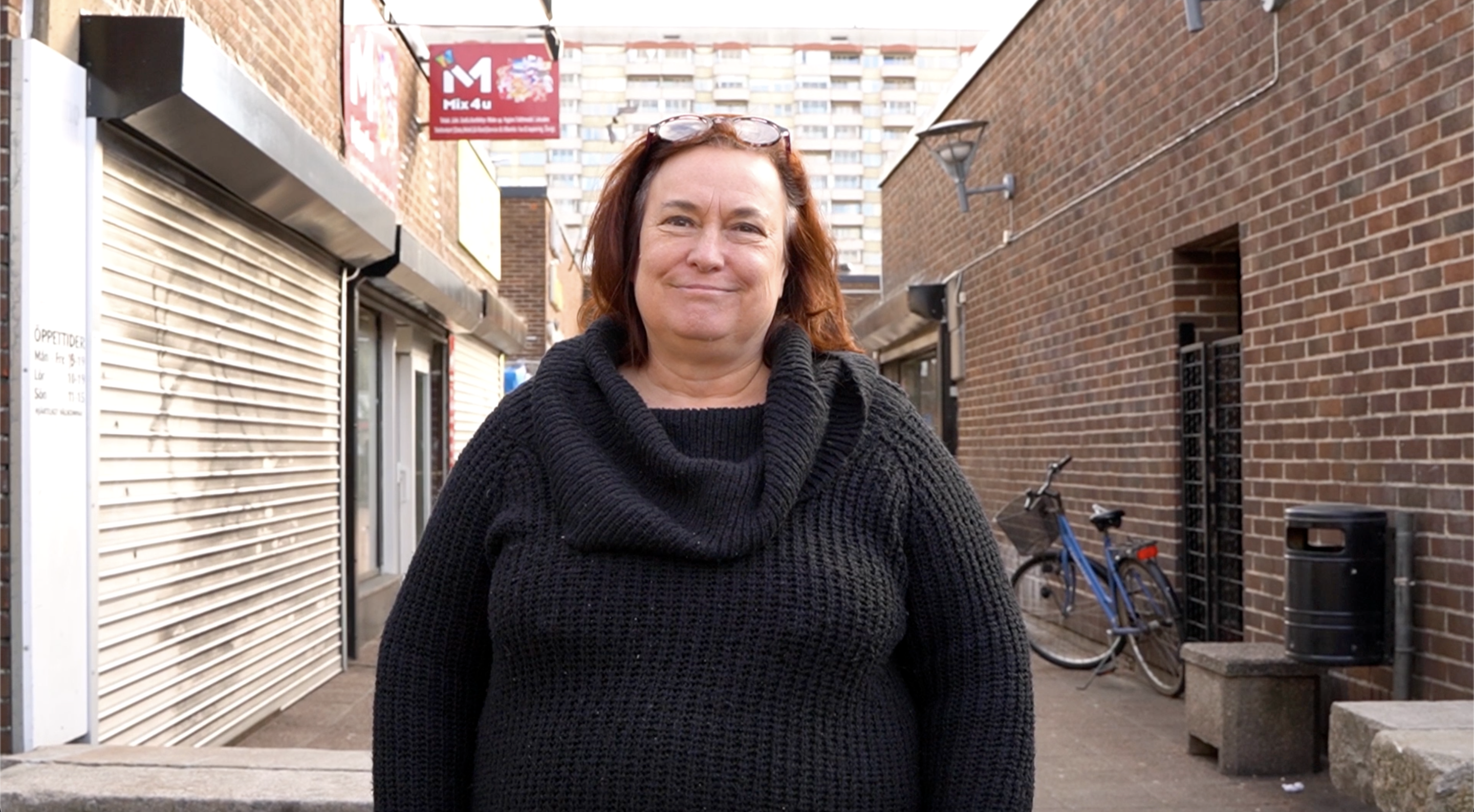
An increasing number of people and marginalized groups in society are suffering from lifestyle-related diseases. Researcher Margareta Rämgård, at Malmö University, has worked with a range of stakeholders and the residents of Lindängen to develop a successful method for promoting better health.
Health inequalities among different groups in Sweden are a major and complex societal challenge. This leads to increased costs in healthcare and many other sectors of society. Lindängen is a neighborhood in Malmö with a population of just over 7,000. The neighborhood is one of the areas in Malmö facing socioeconomic challenges. About 50 percent of residents are employed, income and education levels are lower than in other parts of Malmö, and the proportion receiving welfare benefits is higher. In Lindängen and similar areas, health issues are generally more prevalent than in other parts of the city.
Jörgen Andersson and Sadiye Altundal both work for the City of Malmö in Lindängen. In their work, they clearly see the need for community spaces and initiatives that promote health.
“Residents of Lindängen have a great need for community spaces and workshops, just like other areas of the city facing socioeconomic challenges. Housing is very cramped, and residents—especially women—need a safe, neutral place where they can build social connections,” says Sadiye Altundal, development coordinator for Mötesplats ReTuren in Lindängen.
Works based on a model for community-driven health promotion
It is in Lindängen that Malmö University’s collaboration platform and research program, “Health-Promoting Innovation in Collaboration—For Equitable Health,” has taken shape. Under the leadership of researcher Margareta Rämgård, researchers from various academic disciplines at Malmö University, together with 13 partners—including the City of Malmö—have developed health-promoting resources.
“We work according to a model for community-driven health promotion called CBPR (Community-Based Participatory Research), which was developed in the United States. It is based on action research and participatory principles,” says Margareta Rämgård.
This means that the work is initiated and carried out in collaboration with the community and local stakeholders. Through this collaborative effort, they have developed six health-promoting labs—referred to as workshops—in the following health areas: physical activity, mental health, social health, oral health and nutrition, and women’s health.
“The residents share their experiences and knowledge with one another, and talk about what health and illness mean and what their own health is like,” says Sadiye Altundal.
Health promoters facilitate and lead the work in the health workshops
Each workshop is led and facilitated by a health promoter who lives in Lindängen. Iftikhar Ali has been involved in the project since it began in 2016. She lives near the center of Lindängen and knows many people in the area. She is now one of the health promoters working part-time (80 percent), currently employed by Stena Fastigheter.
“I share health information and participate in all the workshops, but I focus on women’s health. I’ve received training in fitness, with a focus on women’s fitness and healthy eating, and I’ve become a fitness and yoga coach,” she says.
“I run a large workshop offering a variety of activities for people of all ages. We focus on the Swedish language and organize language cafés, cook, exercise, go for walks, garden, and ride bikes,” says Iftikhar Ali.
A bridge between stakeholders and the public
It is clear that the health promoters are one of the key factors in the success of the initiative.
“We’ve been working on building trust. That trust allows participants to support one another in a social setting. The health promoters serve as the bridge. Without them, none of this would have been possible,” says Jörgen Andersson, development coordinator for Framtidens Hus in Lindängen.
So far, the health promoters have met with over 320 people a week, of different genders, ages, and countries of origin. The work as a health promoter also means a lot to Iftikhar Ali:
“It’s amazing. I feel proud. I realized I knew a lot and was helping others. I was well-known in the area; people trusted me,” says Iftikhar Ali.
Several findings that are important for health
Research shows that residents of Lindängen who participated in the activities have experienced an improved quality of life. They report better self-rated and physical health. They eat healthier and have lost weight. But above all, they have gained a sense of social belonging and are in better mental health. The work and initiatives also foster greater trust and security in the neighborhood. There are clear signs of empowerment, with people feeling more in control of their lives and taking the initiative on their own. For example, residents have formed their own community-driven association.
During the pandemic, this model and organization were used to disseminate information about COVID-19. Research shows that health-promoting activities, both outdoors and online, helped strengthen the population’s immune system.
“Our collaborative model builds resilience in the area and is socially sustainable over time,” says Margareta Rämgård.
Interest in the initiative has spread throughout Malmö
Interest in the program has also spread among participants. Word of mouth is spreading through networks and to other neighborhoods in Malmö. Initiatives are now underway in both Hermodsdal and Kroksbäck, and the hope is to launch the program in Holma this summer as well.
Aiming to prevent illness and improve overall health
Through the research program and the collaboration platform, Margareta Rämgård and all those involved in the initiative aim to prevent disease and empower individuals to take an active role in improving their own health, regardless of their background or socioeconomic status.
“We want to improve overall health by promoting healthier lifestyles. I believe in a future where all residents have good and equitable access to health-promoting services, regardless of their background or socioeconomic status, through a participatory initiative that centers on civil society and brings together stakeholders from all sectors of society to work together in networks,” she says.
Collaboration is key to achieving results and success
Jörgen Andersson emphasizes the importance of cooperation:
“If we want to promote health and address other complex societal challenges, many stakeholders need to work together. As an individual actor, you don’t have the mandate, the time, or the resources. If everyone contributes, it becomes easier than if you have to shoulder everything on your own,” he says.
“Collaborating with researchers provides a theoretical framework and can elevate the issues to a higher level, lending them legitimacy. The focus on health equity is easy to work with; it’s rewarding and fulfilling to see participants feeling better—and to see them expanding their scope of action on their own terms. As a social worker, that’s what you always want to achieve,” says Jörgen Andersson.
About Equal Health
The project “Equitable Health – Collaborative Health Promotion Innovation” was launchedin 2016 to address health inequalities, with a focus on women’s health, mental and social health, oral health, and physical activity. The research model is called CBPR (Community-Based Participatory Research) and was developed in the United States but adapted to Swedish conditions. Vinnova is one of the funders, and the collaboration partners are: Apotek Hjärtat, Finsam in Malmö, the Skåne County Administrative Board, MKB Fastighets AB, the City of Malmö, Needsdrive, Region Skåne, Save the Children, the Red Cross, Semcon, Skåneidrotten, Stena Fastigheter, TePe, and Trianon.